What is Progressive Overload?

Progressive overload is a fundamental principle in exercise science and strength training. It refers to gradually increasing the intensity, duration, frequency, or volume of exercise over time to continually challenge the body and promote adaptations, such as muscle growth, strength gains, or improvements in endurance.

The concept of progressive overload is based on the idea that in order for the body to make improvements in fitness or performance, it must be subjected to a stimulus that is greater than what it is accustomed to. By progressively increasing the demands placed on the body through exercise, individuals can stimulate physiological adaptations that lead to improvements in strength, endurance, muscle size, or other fitness-related goals.

There are several ways to apply progressive overload:

  1. Increasing resistance: This involves lifting heavier weights over time, which places greater stress on the muscles and promotes strength gains.
  2. Increasing repetitions or sets: Gradually adding more repetitions or sets to an exercise routine can increase the total workload and stimulate muscle growth or endurance improvements.
  3. Increasing frequency: Increasing the number of workouts per week can provide more opportunities for the body to adapt and improve.
  4. Increasing intensity: This can involve increasing the speed of movement, reducing rest periods between sets, or incorporating more challenging exercises.
  5. Progressing exercise complexity: Advancing to more difficult variations of exercises as strength and skill improve can also contribute to progressive overload.

By consistently applying the principle of progressive overload in their training programs, individuals can continue to make gains and avoid plateauing in their fitness progress over time. However, it’s important to progressively increase the workload gradually and safely to minimize the risk of injury and allow for proper recovery.

Why is this such an effective approach?

  1. Stimulates muscle growth: Progressive overload challenges your muscles by gradually increasing the intensity of your workouts. This constant challenge forces your muscles to adapt and grow stronger over time. By progressively lifting heavier weights, you continuously stimulate muscle growth, leading to gains in strength and muscle mass.
  2. Prevents plateau: When you perform the same exercises with the same weights and repetitions for an extended period, your progress may stagnate as your muscles adapt to the workload. Progressive overload prevents this plateau by continually increasing the demands placed on your muscles, ensuring that they continue to adapt and grow.
  3. Improves strength: Gradually increasing the weight you lift in your workouts improves your muscular strength. This increased strength not only helps you lift heavier weights but also enhances your overall functional abilities, making daily tasks easier and reducing the risk of injury.
  4. Promotes muscle hypertrophy: Progressive overload is essential for muscle hypertrophy, which is the process of increasing muscle size. By progressively challenging your muscles with heavier weights, you create micro-tears in the muscle fibers, stimulating the body to repair and rebuild them to be larger and stronger.
  5. Enhances performance: Whether you’re a competitive weightlifter or an athlete in another sport, progressive overload is crucial for improving athletic performance. By continually pushing your limits and increasing the demands placed on your muscles, you develop the strength, power, and endurance needed to excel in your chosen activity.
  6. Increases metabolic rate: Building lean muscle mass through progressive overload can increase your basal metabolic rate (BMR), which is the number of calories your body burns at rest. This means that you’ll burn more calories even when you’re not exercising, making it easier to manage your weight and body composition.
  7. Builds confidence and motivation: Seeing tangible progress in your strength and muscle gains can be incredibly motivating and boost your confidence in your abilities. Knowing that you’re getting stronger and making improvements in your workouts can keep you motivated to continue pushing yourself and striving for your fitness goals.

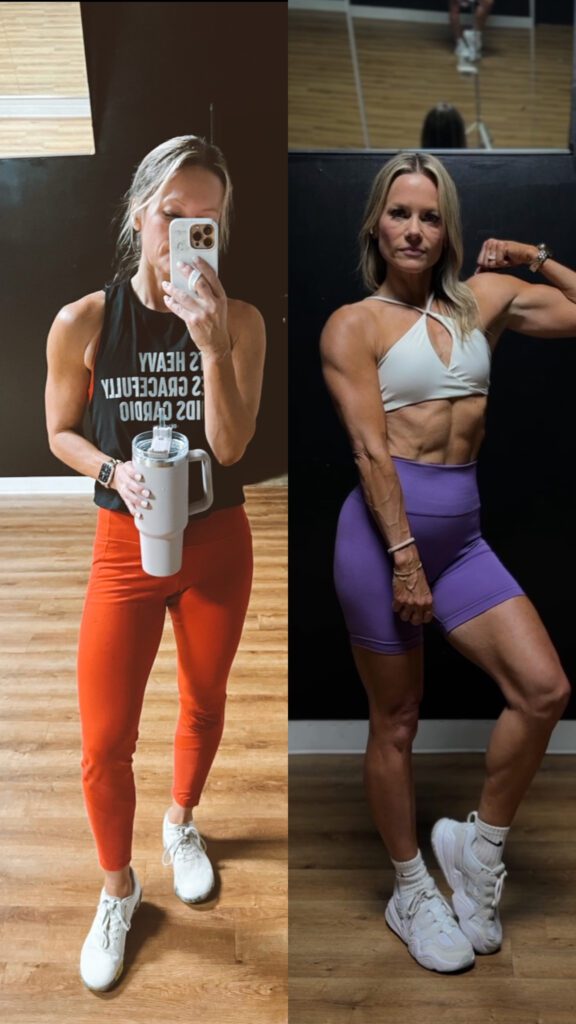
This is the intention I have been training with consistently, along with proper nutrition for the past 1.5 years, and the results show! If you’re ready to start building that SCULPTY bod with the progressive overload approach, I have a number of PROGRAMS for you to choose from!!


Add a comment...

Your email is never published or shared. Required fields are marked *

MACROS! What did I do to achieve my results?

This is a question I get A LOT! I’m going to break it down here!

Photo on left taken June 2021 Photo on right taken March 2024

When I decided it was time for the jerk perimenopause layer to be gone, I knew that in conjunction with my fitness, I would need to dial in my nutrition to achieve the results I was after. Personally, I love the macro approach because you have your set Macros (Protein, Carbohydrates, Fats) according to your goals, then you plug in the foods you want and enjoy eating to fit the numbers. It’s almost like a puzzle piece. It takes some work and focus to make it all fit, but once you get it figured out, you’ll feel like an old pro!

These are my stats: I started at around 133 pounds (I am 5’3″) and I wanted to lose around 10 pounds while still maintaining muscle. In all of my research, I saw that lifting heavy weights and walking daily was the ticket along with high protein, so this is what I did!!

I started by figuring out what my MACROS needed to be. This CALCULATOR is a great tool to figure out your baseline! I plugged in my current weight and entered “Moderate exercise”. Even though I was lifting 4-5 days a week and getting 10k steps a day, the rest of the day was mostly sitting and did not include a lot of activity. Unless you have a very active job that requires a lot of physical activity, I would enter “light” or “moderate” exercise even if you workout most days. Once I saw my numbers I clicked to the “cutting” tab with “moderate carbs”. I increased my protein number of grams to match my goal ideal body weight (pounds). I adjusted the carbs and fats to fit the calories. This is the food scale I used!

For example: at a weight of 130, the calculator tells me at a “cut with moderate carbs”, these need to be my macros: 100 grams protein, 52 grams fat, 116 grams carbs. I bumped up my protein to 125 grams, kept fat around 40-50 grams, and adjusted my carbs to around 100 grams. (Note to add: I do not drink alcohol or eat refined sugar. I do stevia, honey, and coconut sugar as well as fruit. Just none of the refined stuff!)

Within 2-3 months (first month the scale didn’t move! My body was adjusting to the protein intake!) I was at my goal weight so I increased my calories to maintenance. Side note: if you’re struggling with the protein intake and bowels aren’t moving, here is my ANTI-CONSTO hack! Make sure you are also getting at least 25g of fiber daily!

What I realized soon was that my maintenance baseline was increasing as I was putting on muscle because the scale kept going down. This is why I recommend listening to your body and adjusting as you go because each person is their own unique individual! I have gone back and forth between maintenance and slight increase in calories (2 weeks 150-200 over maintenance) and back to maintenance.

Throughout this process I was lifting progressive overload, 5-6 days a week body part split and walking 10 thousand steps per day. If you need a lifting program I have a variety to choose from! Check them out HERE! (this is the WALKING PAD I use to help get those steps in!) I was very disciplined with measuring food, and as I became familiar with portion sizes, eating a lot the same types of foods daily. I would recommend when you are starting out, to measure and track everything! Every sip, bite, lick. Because the calories can add up quickly! As you become more familiar you will not need to track as closely. I now follow a more 80/20 rule. I’m on point 80% of the time and have flex 20% of the time. I enjoy eating out with friends and family!

I have continued to recomp my body through maintenance over the past year. Lifting heavy and eating around 1700-1800 calories daily (weight around 115-117). My current macros are around 140 grams protein, 155 carbs, 60 fats. I love the way I look and feel and plan to maintain from here. If I want to add muscle, I will work in a slight surplus (100-200 calories above maintenance) for a 2-3 weeks then return to maintenance.

I’m still learning a lot about macros and that each person is so unique in their personal needs and how their body responds. But I wanted to share what has worked for me!!

Foods that I love: eggs, egg whites, chicken, greek yogurt, rice cakes with nut butter, beef, salmon, shrimp, scallops, PROTEIN POWDER (use code ALICIAE for 10% off) and PROTEIN BARS (use code MIDLIFEMAVEN for 15% off), berries of all kinds, apples, broccoli, cauliflower, spinach, oats, rice, potatoes, Banzai chickpea noodles, Lily’s chocolates and Ninja Creami Protein Ice cream to satisfy my sweet tooth, to name a FEW! I’m coming out with a recipe book soon so keep your eyes peeled for that!

I hope this helps you gain a little more understanding about how macros work and what might be a good starting point! I will be offering MACRO coaching in the near future!!

Thank you for being here and remember it’s a process! Good things take time!

Add a comment...

Your email is never published or shared. Required fields are marked *

Why is Habit Stacking such a great idea?

So many women ask, “Where do I start?” and to that I say, if you are just getting started, HABIT STACKING is a great approach. We tend to want to do it all at once. Habit stacking is an approach that will set you up for long term success. This isn’t a sprint! Time is going to pass anyway. Set yourself up to win!

  1. Focus: Trying to master multiple habits simultaneously can lead to cognitive overload and dilute your focus. By concentrating on one habit at a time, you can direct your energy and attention towards making meaningful progress in that area.
  2. Better Success Rate: When you focus on mastering one habit at a time, you’re more likely to achieve success because you can dedicate sufficient time and effort to it. This approach allows you to build momentum and confidence, increasing the likelihood of long-term habit adoption.
  3. Avoiding Overwhelm: Introducing too many changes at once can overwhelm your capacity for change and lead to burnout or giving up altogether. By focusing on one habit, you can gradually integrate it into your routine without feeling overwhelmed by multiple simultaneous adjustments.
  4. Deeper Integration: Mastery of a habit involves more than just performing the behavior consistently. It also requires understanding the habit’s nuances, identifying potential obstacles, and developing strategies for overcoming them. By focusing on one habit, you can delve deeper into its intricacies and achieve a higher level of mastery.
  5. Establishing a Strong Foundation: Building habits is a process that requires time and consistency. By mastering one habit at a time, you lay a strong foundation for future habit formation. Once the first habit becomes ingrained, you can then move on to mastering additional habits with a solid base of success.
  6. Sustainable Progress: Sustainable behavior change is about making small, incremental improvements over time. Focusing on one habit at a time allows you to make steady progress without spreading yourself too thin. This approach promotes long-term sustainability and prevents regression.

What habit should you start with when it comes to fitness and health?

If I were you just getting started, I would start with the habit of walking daily. Start with one mile and work your way up to 2 and then 3 miles. Find a time that you can commit to and make it happen daily. If you need to implement a walking pad to achieve your steps, this is the one I currently use.

Once you have mastered this habit, I would start to add in resistance training. My BEGINNER program is a great place to start. Here is the list of suggested equipment for the program!

Once you have been able to commit to to this time requirement, I would suggest you have a goal of 100 grams of protein daily. You can also FIGURE OUT WHAT YOUR MACROS need to be for your goals. Sometimes this can take some adjusting but this calculator will give you a good baseline.

By implementing these three basic habits, you are setting yourself up for success! It’s a challenge at first, then it becomes easy. Then you are ready for the next challenge. If you stumble, start again the next day. It’s not about perfection, it’s about overall consistency!

I believe in you!!! You got this!!! We can do hard things.

Add a comment...

Your email is never published or shared. Required fields are marked *

Can I train for a marathon and still lift and build muscle?

Running Marathons in 2010 on the left – March 2024 lifting weights and walking on the right!

I have been getting this question quite a bit lately. I used to run marathons believe it or not. But even by my late 20’s/early 30’s I started seeing that it was too hard on my body and it wasn’t giving me the results I was wanting with energy or physique.

Mixing lots of running with weight lifting can potentially inhibit muscle growth due to several reasons:

  1. Caloric Deficit: Running burns a significant amount of calories, which can create a caloric deficit if not compensated for by consuming enough calories to support muscle growth. When you’re in a caloric deficit, your body may prioritize using energy for running and other activities over building muscle.
  2. Different Muscle Fiber Types: Running predominantly engages slow-twitch muscle fibers, which are optimized for endurance activities. Weight lifting, on the other hand, typically targets fast-twitch muscle fibers, which have greater potential for hypertrophy (muscle growth). If you’re focusing on both activities simultaneously, you may not be maximizing the stimulation of fast-twitch muscle fibers necessary for muscle growth.
  3. Recovery: Both running and weight lifting place stress on the body, and adequate recovery is crucial for muscle growth. If you’re doing a lot of both activities, you may not be allowing your muscles enough time to recover and grow between sessions.
  4. Hormonal Factors: Endurance activities like running can elevate levels of cortisol, a stress hormone that can have catabolic (muscle-breaking) effects if chronically elevated. Weight lifting, on the other hand, can increase levels of anabolic hormones like testosterone and growth hormone, which are beneficial for muscle growth. Balancing these hormonal responses can be challenging when engaging in both types of activities extensively.
  5. Specificity of Training: To maximize muscle growth, it’s often beneficial to focus on progressive overload with weight lifting, which means gradually increasing the weight lifted over time to continually challenge the muscles. If running occupies a significant portion of your training time and energy, you may not be able to dedicate enough focus and intensity to weight lifting to achieve this progressive overload effectively.
  6. Energy Availability: Running requires a lot of energy, and if you’re expending a significant portion of your energy on running, you may not have enough left for intense weight lifting sessions, which are necessary for muscle growth.

So these are the nuts and bolts! While incorporating both running and weight lifting into your fitness routine can offer various health benefits, including cardiovascular fitness and overall strength, it’s essential to strike a balance and consider how these activities may complement or potentially hinder each other, particularly concerning muscle growth goals. Adjusting training volume, scheduling workouts strategically, ensuring adequate nutrition and recovery, and prioritizing progressive overload in weight lifting can help mitigate potential inhibition of muscle growth when combining these activities.

Today I enjoy lifting heavy (progressive overload training), walking and hiking for cardio. That’s it. I aim for at least 10k steps per day and stay in Zone 2 for 30 minutes – 4-5 times a week.

This goes without saying that NUTRITION is key!! Prioritizing protein at our age is so important! I aim to hit my bodyweight (lbs) in grams of protein daily! Healthy carbs and fats too! Here is a FREE Calculator to give you a baseline for where to start depending on your goals.

It comes down to what you want most? And what’s going to be the most beneficial for you? What are your goals? Start there and decide what your next steps will be!

Whichever way you decide, you can grab one of my lifting PROGRAMS to get started!!!

Add a comment...

Your email is never published or shared. Required fields are marked *

Why is strength training so important during Perimenopause/Menopause?

I will sing about it until every midlife queen knows the truth!! This is all you need to know!

Lifting weights can positively impact hormone regulation during menopause in so many ways:

  1. Increased Testosterone Production: Weightlifting can lead to an increase in testosterone production in women. Testosterone levels tend to decline during menopause, contributing to symptoms like decreased libido and reduced muscle mass. By increasing testosterone levels through weightlifting, women may experience improvements in these symptoms.
  2. Estrogen Balance: Weightlifting can also help maintain a healthy balance of estrogen during menopause. Estrogen levels decline during menopause, leading to symptoms such as hot flashes, mood swings, and bone density loss. Weightlifting can help support bone health by promoting bone density through increased stress on the bones, which can help mitigate the effects of estrogen decline.
  3. Endorphin Release: Weightlifting, like other forms of exercise, can stimulate the release of endorphins, which are neurotransmitters that act as natural painkillers and mood elevators. This can help alleviate symptoms of mood swings, depression, and anxiety that are common during menopause.
  4. Stress Reduction: Regular exercise, including weightlifting, can help reduce stress levels. High levels of stress can exacerbate menopausal symptoms and disrupt hormone balance. By managing stress through exercise, women may experience improvements in their overall hormonal health during menopause.
  5. Metabolic Regulation: Weightlifting can also help regulate metabolism, which can be affected by hormonal changes during menopause. Maintaining a healthy metabolism is important for managing weight, energy levels, and overall well-being during this life stage.

How does adding muscle affect hormone regulation?

  1. Insulin Sensitivity: Building muscle improves insulin sensitivity, meaning your body can more effectively regulate blood sugar levels. This can lead to better control of insulin and glucose levels in the bloodstream, which in turn can positively impact other hormones involved in metabolism.
  2. Growth Hormone (GH) Release: Resistance training, which is often associated with muscle building, can stimulate the release of growth hormone. Growth hormone plays a role in metabolism, muscle growth, and fat metabolism. Increased muscle mass can thus lead to more efficient utilization of growth hormone.
  3. Testosterone Production: Resistance training and muscle building can also lead to increased production of testosterone, a key hormone for muscle growth and maintenance. Testosterone has various metabolic effects and can influence other hormone levels in the body.
  4. Cortisol Regulation: Regular resistance training can help regulate cortisol levels. Cortisol is a stress hormone that, when chronically elevated, can negatively impact various bodily functions, including metabolism and immune function. Building muscle and engaging in regular exercise can help maintain cortisol levels within a healthy range.
  5. Leptin and Ghrelin Balance: Muscle tissue plays a role in energy metabolism and can affect the balance of hormones involved in appetite regulation, such as leptin and ghrelin. Adequate muscle mass can contribute to a healthier balance of these hormones, potentially helping with weight management and metabolic health.
  6. Thyroid Hormones: While the relationship between muscle and thyroid hormones is complex, some studies suggest that resistance training and muscle building can positively influence thyroid hormone levels. Thyroid hormones play a crucial role in metabolism regulation.

Building muscle through resistance training can have multiple positive effects on hormone regulation, impacting various aspects of metabolism, energy balance, and overall health.

I want you to experience the joy of implementing these lifestyle habits and reaping the rewards! It’s not too late you can start NOW!! For more info click here for MY LIFTING PROGRAMS.

I love you and want you to set yourself up for success in the 2nd half!!! My next advanced program is launching in March. Stay tuned!!!

Add a comment...

Your email is never published or shared. Required fields are marked *

Breaking up with Alcohol – How your life might change!

After over 25 years of a love/hate relationship with alcohol, I decided that as I was getting older and starting to go through perimenopause, I needed to be DONE for good! My body was feeling the effects more severely and it was bringing me down in more ways than one. I knew it was time and that for me personally, moderation wasn’t going to work because I had tried and failed many times. I was fed up with my relationship with alcohol and ready for it to no longer have any power over me and my mental space.

I read a book called THIS NAKED MIND by Annie Grace and it completely changed my mindset. I was blown away! This book intensely addresses the mindset shift that needs to happen for success in breaking up with alcohol. It also states the cold hard facts about the reality of what alcohol is! (group 1 carcinogen linked to multiple cancers!) I also completed her 30 DAY ALCOHOL EXPERIMENT and regularly would listen to her podcast. I was blow away and so relieved.

Here is a full LIST OF BOOKS on breaking up with alcohol!

The reason I share on this so often is because I know it can help women out there who are feeling the same. Alcohol had its run, but as we are getting into perimenopause and menopause it just isn’t cutting it anymore. It’s the perfect time to either cut way back or cut it out. Whatever you decide is best for you!

Going alcohol-free can have a PROFOUND impact on a person’s life.

Here are the top ways that giving up alcohol can change your life for the better:

  1. Improved physical health: Alcohol can damage your liver, contribute to weight gain, and weaken your immune system. Giving up alcohol can improve your overall physical health, including your liver function, blood pressure, and weight.
  2. Skin GLOWING: Alcohol can interfere with the absorption and utilization of essential nutrients, including vitamins and antioxidants that are crucial for skin health. Deficiencies in these nutrients can affect skin tone and texture. It can also contribute to inflammation in the body, including the skin. Inflammation can exacerbate skin conditions such as acne, rosacea, and eczema, leading to redness and irritation. Watch your GLOW come on strong when you cut the alcohol!
  3. Mental clarity: Alcohol can impact your mood, memory, and cognitive function. By going alcohol-free, you may notice an improvement in your mental clarity, concentration, and overall well-being.
  4. Better sleep: Alcohol can interfere with your sleep patterns, making it harder for you to get a good night’s rest. By giving up alcohol, you may find that you sleep better and wake up feeling more rested.
  5. Increased energy: Alcohol can be a depressant and drain your energy levels. By giving up alcohol, you may experience an increase in energy and productivity.
  6. Muscle GAINS! Alcohol inhibits protein synthesis, which is essential for muscle growth. Once you stop drinking, your body will be able to use protein more efficiently for muscle building.
  7. More fulfilling relationships: Alcohol can sometimes lead to arguments or conflicts in relationships. By giving up alcohol, you may find that your relationships become more meaningful and fulfilling.
  8. Financial benefits: Alcohol can be expensive, and giving it up can save you a significant amount of money over time.
  9. Greater self-awareness: Going alcohol-free can help you become more aware of your thoughts, feelings, and actions. You may discover new interests, hobbies, or passions that you never knew you had.
  10. More Joy and Confidence: One of the best things about giving up alcohol is that you may find yourself feeling happier overall. This is because alcohol can cause depression, anxiety, and other mental health problems.

Going alcohol-free can be a positive and transformative experience. It might be a struggle at first, but the benefits can be life-changing and worth the effort!!! I promise!

Ultimately you need to do what is best FOR YOU. This needs to be a decision that is going to have the most positive impact on YOUR life. Other peoples judgements and opinions are none of your business.

Always reach out if you want to chat more about it! alicia@themidlife-maven.com

What if you gave up the good for the GREAT?!

Add a comment...

Your email is never published or shared. Required fields are marked *

Why I ditched the long and intense cardio sessions for strength training and walking

When I hit my mid 40’s I started to realize that what I was doing in my 20’s and 30’s for fitness were not serving me and it was time for a real change. My body was changing. My hormones were changing. My needs were changing.

At 48 when I became an empty nester (October 2022), I decided it was time to switch up what I was doing because it was not providing the results I desired. I wanted to lock in my own health and fitness and really up my game!

It was across the board very obvious that strength training and walking were the ticket! I can’t express to you what a relief this was, and a welcomed change. I immediately followed this strategy along with a macro nutritional approach that included high protein (my body weight in pounds in grams of protein daily)! As weeks and month progressed, I began to notice changes in body composition and the way I was feeling.

I have continued with my LIFTING REGIMEN 5-6 days per week and getting in 10k steps per day. I do a portion of my steps after my lift in ZONE 2 for 30-40 minutes. This has been a game changer!

Here are the reasons why strength training and walking are where it’s AT in middle age!

Why is strength training so good for women in perimenopause/menopause?

  1. Bone Health: Menopause is associated with a decline in estrogen levels, which can lead to decreased bone density and an increased risk of osteoporosis. Strength training, particularly weight-bearing exercises, helps stimulate bone growth and maintenance, thereby reducing the risk of osteoporosis and fractures.
  2. Muscle Mass: During menopause, there is a natural decline in muscle mass and strength due to hormonal changes and decreased physical activity. Strength training helps counteract this by building and maintaining muscle mass, which is important for maintaining metabolic health, promoting weight management, and preserving functional abilities.
  3. Metabolism: As women age and go through menopause, their metabolism tends to slow down, making it easier to gain weight and harder to lose it. Strength training helps increase muscle mass, which in turn boosts metabolism and calorie expenditure, making it easier to manage weight and maintain a healthy body composition.
  4. Joint Health: Menopause can exacerbate joint pain and stiffness due to hormonal changes and age-related changes in cartilage and connective tissue. Strength training helps strengthen the muscles around joints, providing better support and stability, which can reduce joint pain and improve mobility.
  5. Mood and Mental Health: Menopause is often accompanied by hormonal fluctuations that can contribute to mood swings, anxiety, and depression. Strength training has been shown to have positive effects on mood and mental health by promoting the release of endorphins, reducing stress, and improving overall psychological well-being.
  6. Hot Flashes and Sleep Quality: Some research suggests that regular exercise, including strength training, may help reduce the frequency and severity of hot flashes in menopausal women. Additionally, exercise has been shown to improve sleep quality, which can be disrupted during menopause.
  7. Heart Health: Estrogen plays a protective role in cardiovascular health, and its decline during menopause can increase the risk of heart disease. Strength training, along with aerobic exercise, helps improve cardiovascular health by lowering blood pressure, improving cholesterol levels, and reducing the risk of heart disease.

Incorporating strength training into a comprehensive exercise routine can help women going through menopause maintain bone health, muscle mass, metabolic health, joint health, and overall well-being during this transitional phase of life.

Why is walking in Zone 2 so good?

Walking in Zone 2, also known as the “aerobic zone,” refers to exercising at an intensity where your heart rate is around 60-70% of your maximum heart rate. This level of intensity is often considered effective for several reasons:

  1. Fat Burning: Zone 2 training primarily relies on fat as a fuel source rather than carbohydrates. This makes it an effective way to improve fat metabolism and promote weight loss or weight management.
  2. Improved Aerobic Fitness: Training in Zone 2 helps improve aerobic fitness by strengthening the heart, lungs, and cardiovascular system. It enhances the body’s ability to utilize oxygen efficiently, which is crucial for endurance activities and overall cardiovascular health.
  3. Sustainable Exercise: Zone 2 training is sustainable for longer durations compared to higher-intensity workouts. This makes it suitable for individuals who are new to exercise, recovering from injury, or aiming to build an aerobic base.
  4. Enhanced Recovery: Exercising at a moderate intensity in Zone 2 allows for adequate recovery between workouts, reducing the risk of overtraining and injury. It also helps promote active recovery on rest days.
  5. Building Endurance: Zone 2 training helps build endurance by gradually increasing the duration and intensity of exercise sessions. This is beneficial for athletes preparing for endurance events like marathons, triathlons, or long-distance cycling races.
  6. Reduced Stress: Moderate-intensity exercise, such as walking in Zone 2, has been shown to reduce stress levels and improve mood by stimulating the release of endorphins, the body’s natural mood elevators.
  7. Heart Health: Regular exercise in Zone 2 improves heart health by lowering resting heart rate, reducing blood pressure, and improving cholesterol levels. This can decrease the risk of cardiovascular diseases such as heart attacks and strokes.
  8. Improved Recovery: Zone 2 training helps improve recovery between high-intensity workouts by promoting blood flow to muscles, facilitating the removal of metabolic waste products, and reducing muscle soreness.

Walking in Zone 2 is effective for improving aerobic fitness, promoting fat burning, enhancing endurance, and supporting overall health and well-being. It’s a sustainable and accessible form of exercise suitable for individuals of all fitness levels.

Hello is this not the best news ever?!

If you are resonating but haven’t made the change yet, this is your sign!!! You’re headed into the best years of your life! Let’s go in feeling amazing and with CONFIDENCE!!!

Thoughts? Questions? Email me! alicia@themidlifemaven

Add a comment...

Your email is never published or shared. Required fields are marked *

My Lifting Programs are HERE!!

I’m so excited to finally launch my first LIFTING PROGRAMS!

The first two are my Advanced Gym and Advanced Home Programs. These are 4 week programs that include a 6 day lifting split. The focus is progressive overload so you will be increasing weight over the course of the 4 weeks! They are available through my app which you will find very user friendly!

This is a dream come true and I’m so excited to help you build muscle and feel amazing in midlife!

Always message me at alicia@themildife-maven.com for any questions!

Add a comment...

Your email is never published or shared. Required fields are marked *

How to peel back the perimenopause layer

This is a question I get pretty often and wanted to chat about it here!

On the left was June 2022 and on the right was October 2023. WOW!

I always want to start with the fact that this is what worked for me! I also want share that I felt on the higher end of stressed out on the left. It had been a trying year and my body felt it. I was also going on regular Crumble Cookie runs, not tracking macros, sporadic with lifting and not doing any specific program consistently. I did not track my steps regularly. I was in perimenopause for sure. So basically I was just kind of winging it and doing what I could with the bandwidth I had at that time.

In the Fall of 2022 both of my girls were gone out of state in college. The house was empty for the first time. Wow this was new. I had dedicated the last 20 years to raising them and they are my pride and joy. But this was a new chapter. What did I want to do?!?! I knew turning 50 in July of 2023 I wanted to feel the best I possibly could and go into this next half of my life fired up and excited for what’s to come.

I decided to lock it in and LOAD. I did my own research. What kept coming through loud and clear was: high protein, lifting heavy, no more long form high intensity cardio, lots of walking, cut the sugar, cut the alcohol. I figured out where my macros needed be, and started lifting 5-6 days a week consistently repeating the same lifts each week doing progressive overload. I cut the sugar, and started walking 8-10k steps daily. I had previously cut alcohol 5 years ago which was a complete life change. Next blog post I will write all about it!

Initially I was in a slight caloric deficit to lose the weight. This was around 300-400 below maintenance but still kept my protein intake high. I ate my target bodyweight (lbs) in protein grams daily. This kept me satiated and maintaining muscle!

It took over a month for my body to finally adjust to the protein and lifting, but once it did it became an incinerator! I will tell you taking my MAGNESIUM complex at night and GREENS in the morning helped my digestion to move along quite wonderfully! (also make sure your fiber intake is at least 25g per day!)

Once I arrived at a weight I was happy with, I started eating at maintenance and sometimes in a slight surplus to continue maintaining and building muscle. Results take time and over the past year and a half I have completely recomped my body through consistency and hard work all while going through perimenopause. YES it’s possible!

I want you to see what’s possible and that change can happen even in midlife!!

Remember to master the basics first!

  • lift heavy and consistently 4-6 days a week (MY PROGRAMS HERE!)
  • ditch the long high intense cardio
  • walk 8-10k steps daily (20-30 minutes of this total in zone 2 – the rest throughout your day)
  • 100 grams of protein daily (free macro calculator HERE) (Also I track with Macros First app)
  • drink your water (half of your body weight (lbs) in ounces daily)
  • ditch the alcohol and refined sugar (or limit!)
  • 7-8 hours of sleep every night!
  • meet with a functional med doc or menopause specialist to discuss hormones!

We got this! Love you!

Add a comment...

Your email is never published or shared. Required fields are marked *

Should you take Creatine?

I used to think Creatine was some kind of crazy bodybuilder drug until I did my research!! I started taking it in January of 2023 and LOVE the results! I personally have had no ill side effects. Only positive! I take 5g a day every day (yes even rest days) and I plan to take it for the foreseeable future!

Here is a LINK to the creatine I take! Use code:  ALICIA65864 for 15% off

Just make sure you are taking Creatine Monohydrate!

Here is a LINK to gummies that are great for on the go and travel. Use code: ALICIA20

Creatine is a popular and well-researched dietary supplement that is commonly used by athletes and fitness enthusiasts. It is known for its potential to enhance performance, especially during short bursts of high-intensity activities. However, like any supplement, creatine comes with both pros and cons. It’s important to note that individual responses to creatine can vary, and consulting with a healthcare professional before starting any supplementation is advisable.

Pros of taking creatine:

Creatine is a popular supplement known for its various benefits, particularly in the context of athletic performance and muscle health. Here are the key benefits of creatine:

1. Enhanced Athletic Performance

  • Increased ATP Production: Creatine helps regenerate adenosine triphosphate (ATP), the primary energy carrier in cells, leading to improved energy production during high-intensity activities.
  • Improved Strength and Power: Regular creatine supplementation can lead to significant improvements in strength, power, and overall exercise performance.

2. Increased Muscle Mass

  • Enhanced Muscle Growth: Creatine promotes muscle protein synthesis, leading to increased muscle mass when combined with resistance training.
  • Cell Hydration: Creatine draws water into muscle cells, increasing cell volume and promoting muscle growth.

3. Improved Recovery

  • Reduced Muscle Damage: Creatine can help reduce muscle cell damage and inflammation following intense exercise, aiding in faster recovery.
  • Decreased Soreness: It may help reduce delayed onset muscle soreness (DOMS), allowing for quicker return to training.

4. Enhanced Brain Function

  • Improved Cognitive Performance: Some studies suggest that creatine supplementation can improve cognitive performance, particularly in tasks requiring short-term memory and quick thinking.
  • Neuroprotection: Creatine may have neuroprotective effects, potentially benefiting conditions like neurodegenerative diseases and brain injuries.

5. Increased Endurance

  • Enhanced Aerobic Capacity: While primarily known for its benefits in anaerobic activities, creatine may also improve endurance by enhancing the energy production pathways in aerobic exercise.
  • Reduced Fatigue: Creatine supplementation can help reduce overall fatigue during prolonged exercise, improving stamina and endurance.

6. Bone Health

  • Increased Bone Density: Some research suggests that creatine may positively impact bone health by increasing bone mineral density, which can be particularly beneficial for older adults.

7. Metabolic Health

  • Improved Glucose Tolerance: Creatine may improve glucose metabolism and insulin sensitivity, which can be beneficial for managing blood sugar levels.
  • Potential Weight Management: While not directly causing weight loss, improved muscle mass and metabolism can aid in weight management efforts.

8. Safety and Tolerability

  • Well-Studied: Creatine is one of the most researched supplements, with a strong safety profile when used appropriately.
  • Minimal Side Effects: For most people, creatine is safe with minimal side effects, typically mild gastrointestinal discomfort if taken in large doses without adequate hydration.

Recommendations for Use

  • Dosage: 3-5 grams per day.
  • Hydration: Drink plenty of water to stay hydrated while taking creatine, as it draws water into muscle cells.
  • Timing: Creatine can be taken at any time, but taking it post-workout with a meal may enhance its benefits.

Cons of taking creatine:

  1. Water retention: Creatine can lead to an initial increase in water weight as it pulls water into muscle cells. This can result in weight gain, but it is not the same as gaining fat.
  2. Gastrointestinal issues: Some individuals may experience gastrointestinal discomfort, such as bloating or cramping, when taking creatine. Staying hydrated can help alleviate these issues.
  3. Individual variability: Responses to creatine can vary among individuals. While many people benefit from creatine supplementation, some may not experience the same level of performance improvement.
  4. Potential for kidney stress: There is ongoing debate about the impact of creatine on kidney function. While most research suggests it is safe for individuals with healthy kidneys, those with pre-existing kidney conditions should consult a healthcare professional before using creatine.
  5. Not suitable for all sports: While creatine is beneficial for activities requiring short bursts of intense effort, it may not be as effective for endurance sports.

It’s essential to use creatine responsibly, following recommended dosages and consulting with a healthcare professional, especially if you have pre-existing health conditions or concerns. Additionally, obtaining creatine from dietary sources like meat and fish is an alternative for those who prefer not to use supplements.

Always consult with healthcare professionals or sports nutrition experts for personalized advice based on your health and fitness goals. Keep in mind that individual responses to creatine can vary, and what works for one person may not be suitable for another.

Just starting Creatine in January 2023 on the left vs July 2024 on the right!

Why Creatine Monohydrate?

Creatine monohydrate is the most commonly used and researched form of creatine supplement, and it is widely considered the gold standard for several reasons:

1. Effectiveness

  • Proven Performance: Numerous studies have demonstrated that creatine monohydrate effectively enhances strength, power, muscle mass, and exercise performance.
  • Broad Benefits: It provides a range of benefits, from improved athletic performance to enhanced recovery and muscle growth.

2. Scientific Validation

  • Extensive Research: Creatine monohydrate is the most extensively studied form of creatine, with hundreds of studies supporting its efficacy and safety.
  • Consistent Results: Research consistently shows that creatine monohydrate delivers reliable results across various populations and types of exercise.

3. Bioavailability

  • High Absorption: Creatine monohydrate has excellent bioavailability, meaning it is easily absorbed and utilized by the body.
  • Effective Uptake: It effectively increases creatine stores in muscle tissues, which is crucial for its performance-enhancing effects.

4. Safety

  • Proven Safety Profile: Creatine monohydrate has a well-documented safety profile when used appropriately, with minimal risk of adverse effects for most users.
  • Long-Term Safety: Long-term studies have shown that it is safe for use over extended periods.

5. Cost-Effectiveness

  • Affordable: Creatine monohydrate is one of the most affordable forms of creatine available.
  • Value for Money: Given its effectiveness and low cost, it provides excellent value for money compared to other forms of creatine.

6. Versatility

  • Ease of Use: Creatine monohydrate is available in powder form, making it easy to mix with water, juice, or other beverages.
  • No Need for Complex Cycles: Simple loading and maintenance phases are sufficient to achieve optimal benefits.

7. Comparison to Other Forms

  • Creatine Ethyl Ester: Promoted as more absorbable, but studies suggest it is less effective at increasing muscle creatine levels than monohydrate.
  • Creatine Hydrochloride (HCl): Known for better solubility, but no significant performance benefits over monohydrate have been proven.
  • Buffered Creatine (Kre-Alkalyn): Claims to reduce stomach discomfort and improve stability, but lacks substantial evidence to prove superior efficacy.
  • Micronized Creatine: A finer form of monohydrate, offering the same benefits with potentially better solubility and reduced clumping.

Hope this helped inform you a little more about Creatine!!

Happy Lifting!!!!

Add a comment...

Your email is never published or shared. Required fields are marked *

https://quiet-art-86968.myflodesk.com/kf3i9pwg51